
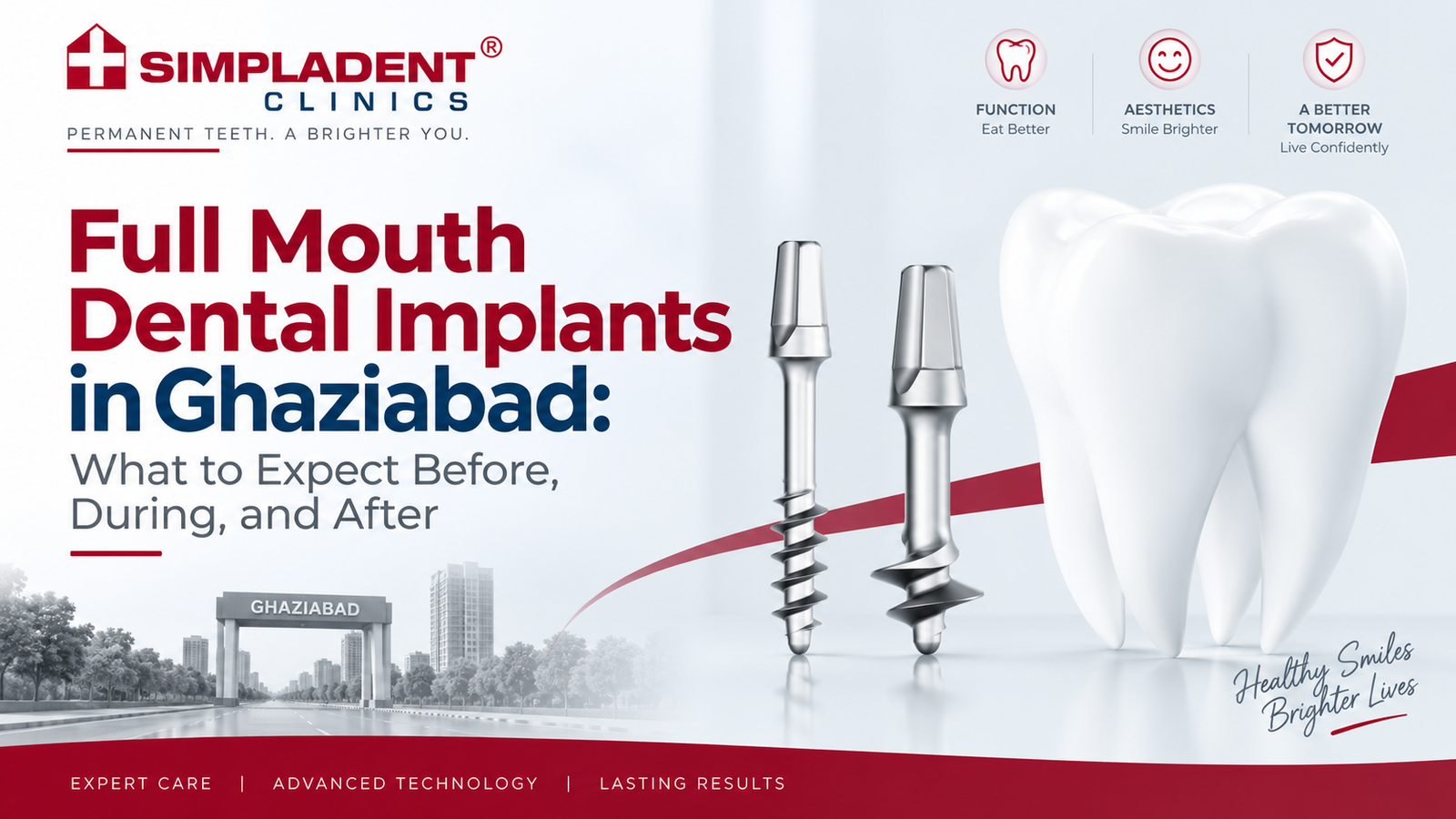
If you’re missing most or all of your teeth, full mouth dental implants are one of the few options that restore both function and appearance with a fixed (non-removable) result. At Simpladent Clinics in Ghaziabad, this is done using Corticobasal® implants — a single-piece, immediate-loading approach designed to anchor in denser cortical bone rather than the softer bone conventional implants typically rely on.
This guide covers how the treatment works, who it may suit, and what’s genuinely known versus what’s still being studied — so you can walk into a consultation with real questions, not guesses.
What Are Full Mouth Dental Implants?
Full Mouth Dental Implants in Ghaziabad replace an entire arch (or both) of missing or failing teeth using a small number of implants supporting a fixed prosthetic bridge. With the Corticobasal® method, implants are single-piece and load-bearing from early on, which is why fixed teeth can often be fitted in about 72 hours in suitable cases — timelines vary by patient and clinical complexity.
This differs from conventional two-stage implants, which usually require a longer healing period before the final teeth are attached, and sometimes bone grafting or sinus lifts first.
Who Is a Candidate — and Who Isn’t
Corticobasal® implants are often considered for patients with significant bone loss who want to avoid grafting or sinus lift procedures. That said, candidacy isn’t universal. Patients with certain conditions — including uncontrolled diabetes, heavy smoking, or active gum infection — may or may not qualify, depending on individual assessment. Conventional implants remain the better-evidenced option for some cases, particularly where long-term data matters most: conventional implants have a longer, more established outcome track record, while basal/corticobasal outcome literature is comparatively newer and more limited. A CBCT scan and clinical exam are how candidacy is actually determined — not a blanket yes.
The Simpladent Process
Assessment — CBCT imaging, medical history, and a discussion of what’s realistic for your case.
Single-surgery placement — implants are placed in a single procedure, often without grafting.
Fixed teeth — a temporary fixed prosthesis is typically attached within about 72 hours, in suitable cases.
Follow-ups — healing checks and adjustment of the final prosthesis over subsequent visits.
Recovery and Aftercare
Most patients report manageable discomfort in the days after surgery, managed with routine pain relief and a soft-food diet initially. Oral hygiene around the implant site and scheduled follow-ups matter for long-term stability — no implant system removes the need for maintenance.
What This Doesn’t Guarantee
No implant system — Corticobasal® or conventional — can promise a guaranteed outcome, a fixed success percentage, or permanence regardless of care. Results depend on bone quality, oral hygiene, overall health, and follow-up. Anyone promising otherwise isn’t giving you the full picture.
FAQ
Are full mouth implants painful?
Most patients report the procedure is manageable under local anaesthesia, with discomfort in the days after that’s typically controlled with standard pain relief.
How is this different from conventional implants?
Corticobasal® implants anchor in cortical bone and are often loaded sooner, which can avoid grafting in some cases. Conventional implants have a longer track record of long-term outcome data.
Am I a candidate if I have diabetes or smoke?
Possibly — this depends on how well-controlled the condition is and requires individual clinical assessment, not a generic yes or no.
Do the implants come with a lifetime guarantee?
No implant system can honestly promise a lifetime or 100% outcome. Long-term success depends on maintenance, hygiene, and follow-up care.
How much do full mouth implants cost?
Cost depends on the number of implants, arch(es) involved, prosthesis material, and imaging needs. A consultation is the only way to get an accurate figure for your case.
Keep yourself updated by following our Social Page for the latest news and information.

 Facebook
 Youtube
 Twitter
 Instagram
 Linkedin

Leave A Comment